 0
0
 0
0
Language is always evolving, but youth slang operates on its own fast‑moving frequency. For many adults, the expressions teenagers use can feel like a secret code — one that shifts so quickly you barely catch a meaning before it’s already outdated. Teenagers might simply say you’re being “cringe.” But behind the confusion lies something fascinating: a linguistic playground where identity, belonging, and cultural influences collide.
Why Youth Slang Changes So Rapidly
Teenagers are linguistic trendsetters. Their vocabulary is shaped by TikTok, gaming culture, memes, music, and global pop trends. A phrase can go viral in hours and vanish just as quickly. What’s cool in Vienna today might already be passé in Hamburg tomorrow.
Youth slang also serves a social function. It marks who belongs to the group — and who doesn’t. Linguists call this the Idiolekt, the personal language style that reflects personality, background, and social environment. For young people, slang is a way to experiment with identity and to draw playful boundaries between generations.
The Strangest (and Most Popular) Youth Slang Terms
Here are some of the most curious expressions circulating among teens in German‑speaking countries — a mix of English imports, gaming jargon, and internet-born creativity.
- Cringe — Something embarrassing or painfully awkward.
“That outfit is so cringe.” - Slay — To excel effortlessly; to impress with confidence.
“You slayed that exam.” - NPC — From gaming: a “non-player character.” Used for someone acting passive, predictable, or socially unaware.
“He’s walking around like an NPC.” - Rizz — Short for “charisma.” Refers to flirting skills or charm.
“She’s got serious rizz.” - 6–7 — A playful rating system teens use to describe someone who is “okay, but not amazing.” It’s often used jokingly among friends, not as a serious judgment.
“Be honest, what do you think?” — “Hmm… maybe a 6–7.” - Sus — Short for “suspicious.” Popularized by Among Us.
“That story sounds sus.” - Based — Being unapologetically confident in your opinion.
“He said it straight. That’s based.” - Gönn dir — A German favorite meaning “treat yourself.”
“Gönn dir that new jacket.” - Wild — Something extreme, surprising, or impressive.
“That concert was wild.”
These expressions may sound strange, but they reveal how deeply digital culture shapes modern communication.
Regional and Cultural Influences
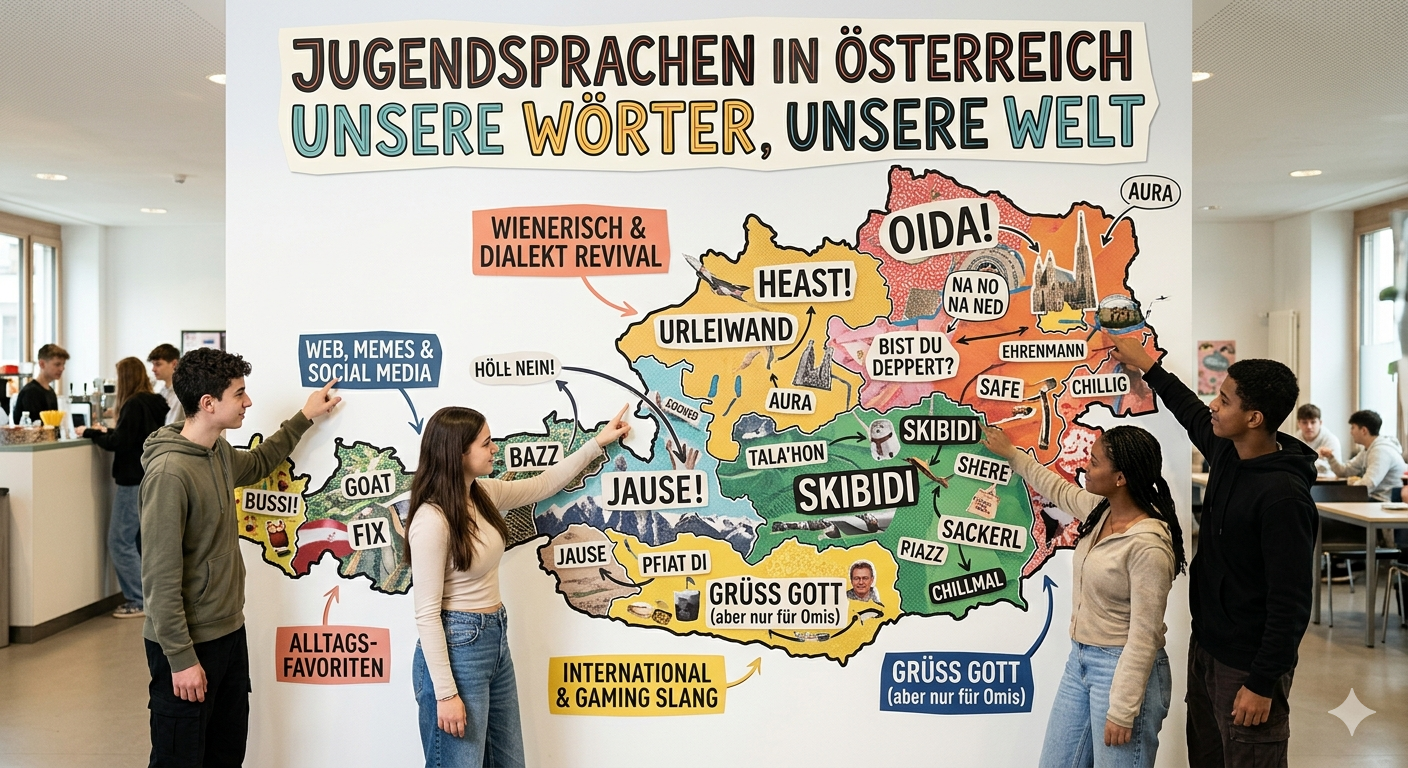
Youth slang is far from uniform. In Austria, for example, global internet vocabulary blends with dialect:
- “Oida, das war wild.”
- “Bruder, gönn dir.”
Migrant communities also enrich the linguistic landscape, adding expressions from Turkish, Arabic, English, and beyond. Context matters: a word that’s positive in one group can be ironic or even insulting in another.
What These Words Reveal About Young People
Behind the humor, youth slang reflects:
- Digital life — memes, games, and social platforms shape vocabulary
- Identity — slang helps teens express who they are
- Belonging — shared language strengthens group bonds
- Creativity — slang is a space for play, irony, and reinvention
- Boundaries — it marks who’s “in the know” and who isn’t
Adults may roll their eyes, but for teens, these words are tools for navigating a fast-changing world.
- Hector Pascua/picture: gemini.google.com



This post has already been read 5139 times!